

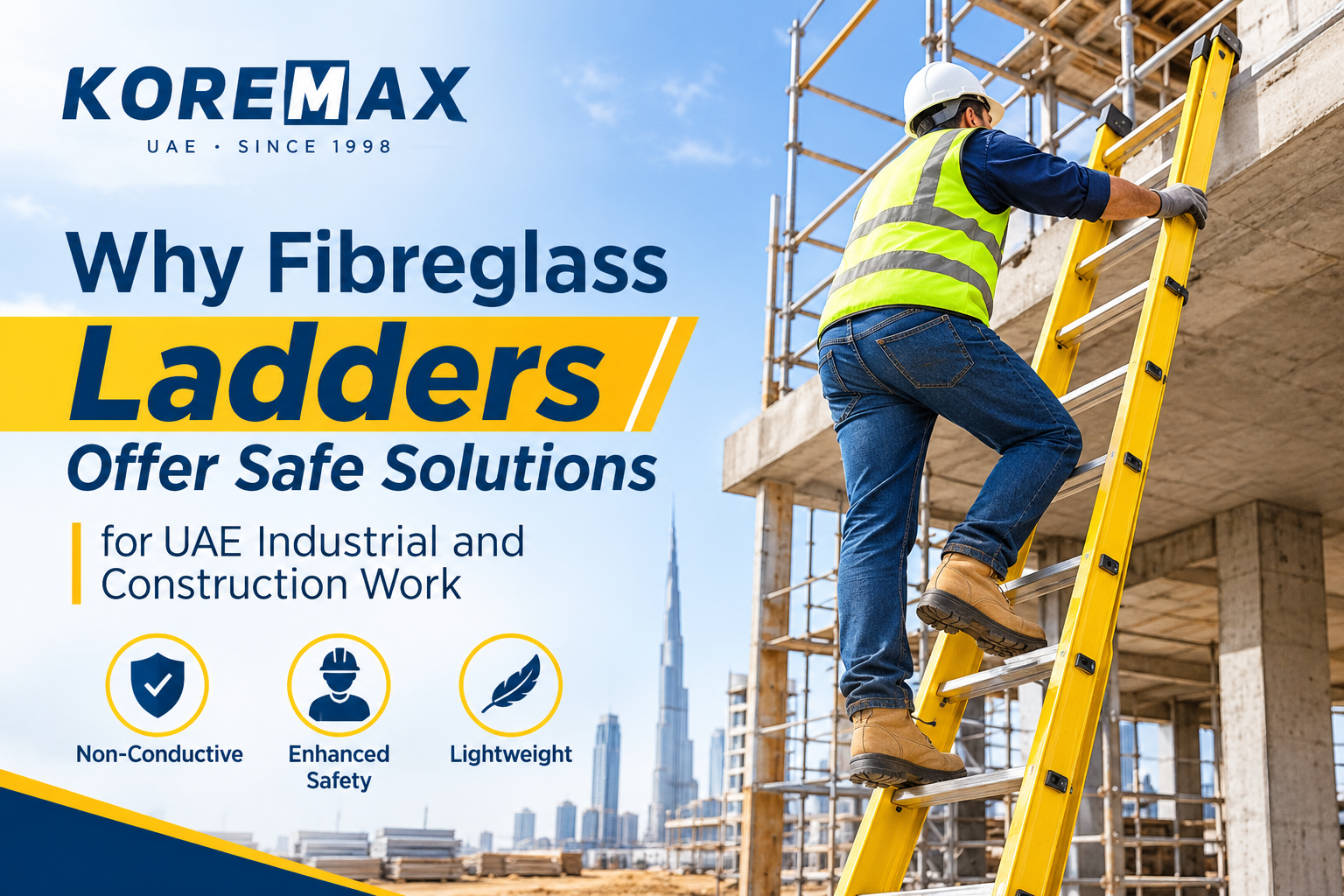
Industrial and construction environments require access equipment that can handle demanding working conditions without compromising worker safety. From electrical maintenance and building installations to warehouse repairs, choosing the right ladder makes a practical difference. Fibreglass ladders are widely used in these settings because their non-conductive material offers an important advantage when work takes place near electrical equipment.
For contractors, maintenance teams and facility managers across the UAE, these ladders provide a durable option for a range of elevated tasks. However, safe selection still depends on the working height, load requirements, floor conditions and nature of the job.
Why Choose Fibreglass Ladders for Industrial Work?
Fibreglass ladders are made using reinforced plastic materials designed to provide strength and stability. Unlike aluminium ladders, fibreglass models do not conduct electricity under normal dry and undamaged conditions. This makes them particularly useful for certain electrical and maintenance applications.
Their benefits include:
- Electrical insulation: Non-conductive construction helps reduce electrical contact risks when working near live electrical sources. It does not replace isolation procedures or other electrical safety controls.
- Durability: Quality fibreglass construction can withstand regular use in demanding work environments.
- Corrosion resistance: Fibreglass does not rust, making it suitable for locations where moisture or certain chemicals may affect metal equipment.
- Workplace versatility: Available in different configurations for maintenance, construction, installation and industrial applications.
- Stable working support: Suitable models provide a secure structure when placed on an appropriate, level surface and used within their rated capacity.
These features make fibreglass a practical material choice, particularly where electrical hazards need to be considered during equipment selection.
4 Applications of Fibreglass Ladders in the UAE:-
Different industries require access to elevated areas for installation, inspection and repair work. Fibreglass ladders can support several routine tasks when the selected model matches the application.
1. Electrical Installation and Maintenance:-
Electricians often work around distribution boards, wiring systems, lighting installations and other electrical infrastructure. Using non-conductive access equipment can help reduce the risk associated with accidental contact between a ladder and an electrical source.
Fibreglass models are therefore commonly considered for electrical maintenance. Workers must still follow proper isolation procedures, inspect equipment and maintain safe working distances.
2. Construction and Building Maintenance:-
Construction teams regularly need access to ceilings, service installations, wall fixtures and elevated work areas. Suitable ladders for construction can support tasks such as installing electrical fittings, painting, inspection and finishing work.
Fibreglass models are useful where electrical systems are present or where a non-metallic ladder is preferred. The ladder must be appropriate for the task, working height and site conditions.
3. Industrial Facilities and Warehouses:-
Factories and warehouses require regular inspection and maintenance of lighting, ventilation systems, overhead installations and machinery. A suitable fibreglass ladder can provide access without introducing a conductive metal structure into certain work areas.
For facilities with frequent maintenance requirements, choosing the correct ladder configuration can also help teams work more efficiently.
4. HVAC and MEP Work:-
HVAC and MEP technicians may need to access ducting, cable trays, lighting systems and other building services. Fibreglass ladders can be considered for these applications, particularly where electrical equipment is nearby.
The ladder’s height, platform arrangement and load rating should be checked against the specific work requirements.
Types of Fibreglass Ladders to Consider:-
The right ladder design depends on how workers need to access the elevated area and whether the task requires one or two working sides.
Single-Sided Fibreglass Ladders:-
Single-sided models are designed for access from one side and are suitable for many routine maintenance and installation tasks. They are useful where workers can position the ladder against a suitable supporting surface. KMGT also offers straight ladders for different access requirements.
Double Sided Ladder:-
A double sided ladder allows access from both sides, making it useful for certain maintenance, installation and inspection activities. Some models can accommodate workers on either side, subject to the manufacturer’s instructions and rated capacity.
This configuration can be practical in open work areas where access from both directions is beneficial. The ladder should be fully opened and locked before use.
Fibreglass Platform Ladder:-
A fibreglass platform ladder includes a standing platform that provides a larger working area than a conventional step. Depending on the design, it may also include a guardrail or other features intended to support the operator.
Platform ladders can be useful for tasks requiring both hands, such as fitting components, carrying out inspections or completing maintenance work. Workers should still avoid overreaching and follow the manufacturer’s guidance on standing positions and load limits.
How to Select the Right Fibreglass Ladder?
Before purchasing a ladder, assess the work environment and the tasks employees will perform. A model that suits routine indoor maintenance may not be appropriate for every construction or industrial application.
Consider these factors:
- Working height: Choose a ladder that provides the required access without forcing the user to stand on the top steps or overreach.
- Load capacity: Account for the operator, clothing, tools and materials. Stay within the ladder’s stated duty rating.
- Ladder configuration: Decide whether a single-sided, double-sided or platform design best suits the task.
- Foot design: Check that the feet provide suitable grip and are in good condition.
- Build quality: Look for sound construction, secure joints, stable steps and reliable locking mechanisms.
- Work environment: Consider floor surfaces, available space, weather exposure and proximity to electrical equipment.
For frequent or demanding use, sourcing ladders from a reliable supplier can also help businesses compare available specifications and identify suitable models.
Safe Use and Maintenance of Fibreglass Ladders:-
Fibreglass construction offers useful advantages, but it does not make a ladder automatically safe. Damage, incorrect positioning and poor working practices can still lead to serious accidents.
Follow these precautions:
- Inspect the stiles, steps, feet, joints and locking mechanisms before use.
- Check for cracks, splintering, delamination or other visible damage to the fibreglass.
- Keep the ladder clean and dry, following the manufacturer’s care instructions.
- Position it on a firm, level and stable surface.
- Secure the ladder where required and maintain three points of contact when climbing.
- Avoid overreaching or moving the ladder while someone is on it.
- Keep ladders away from overhead electrical hazards unless the work has been properly assessed and controlled.
- Remove damaged ladders from service until they have been assessed by a competent person.
Regular inspections are especially important on construction sites and in industrial facilities where ladders may be moved frequently or exposed to rough handling. Businesses can also explore PPE safety equipment to review other workplace safety supplies.
Source Industrial Ladders from Koremax General Trading LLC:-
Choosing the right access equipment helps construction contractors, electrical teams and industrial maintenance professionals carry out elevated work with appropriate safety measures. Fibreglass ladders are worth considering where non-conductive equipment is required, but the final choice should always reflect the task, environment and manufacturer’s specifications.
Koremax General Trading LLC supplies ladders, tools, PPE and other industrial products for businesses across the UAE. Whether your team requires a double-sided model, a platform ladder or equipment for routine maintenance, discuss your working requirements when selecting a suitable option.
Frequently Asked Questions
- Are fibreglass ladders suitable for electrical work?
They are commonly used for electrical applications because fibreglass is non-conductive under normal dry and undamaged conditions. However, they do not remove the need for electrical isolation and safe working procedures.
- Are fibreglass ladders better than aluminium ladders?
Fibreglass ladders offer an advantage around electrical hazards because they are non-conductive. Aluminium ladders are generally lighter, so the right choice depends on the work environment and handling requirements.
- What is a double-sided fibreglass ladder used for?
It allows access from both sides and can be useful for maintenance or installation tasks in open work areas, provided the model is designed for that type of use.
- When should I choose a fibreglass platform ladder?
A platform ladder may suit tasks that require a larger standing area or extended work at a fixed height. Check its platform design, guardrails, load rating and permitted working positions.
- How often should fibreglass ladders be inspected?
Inspect them before each use and carry out more detailed inspections at intervals determined by usage, workplace conditions and applicable safety procedures. Remove any damaged ladder from service.