

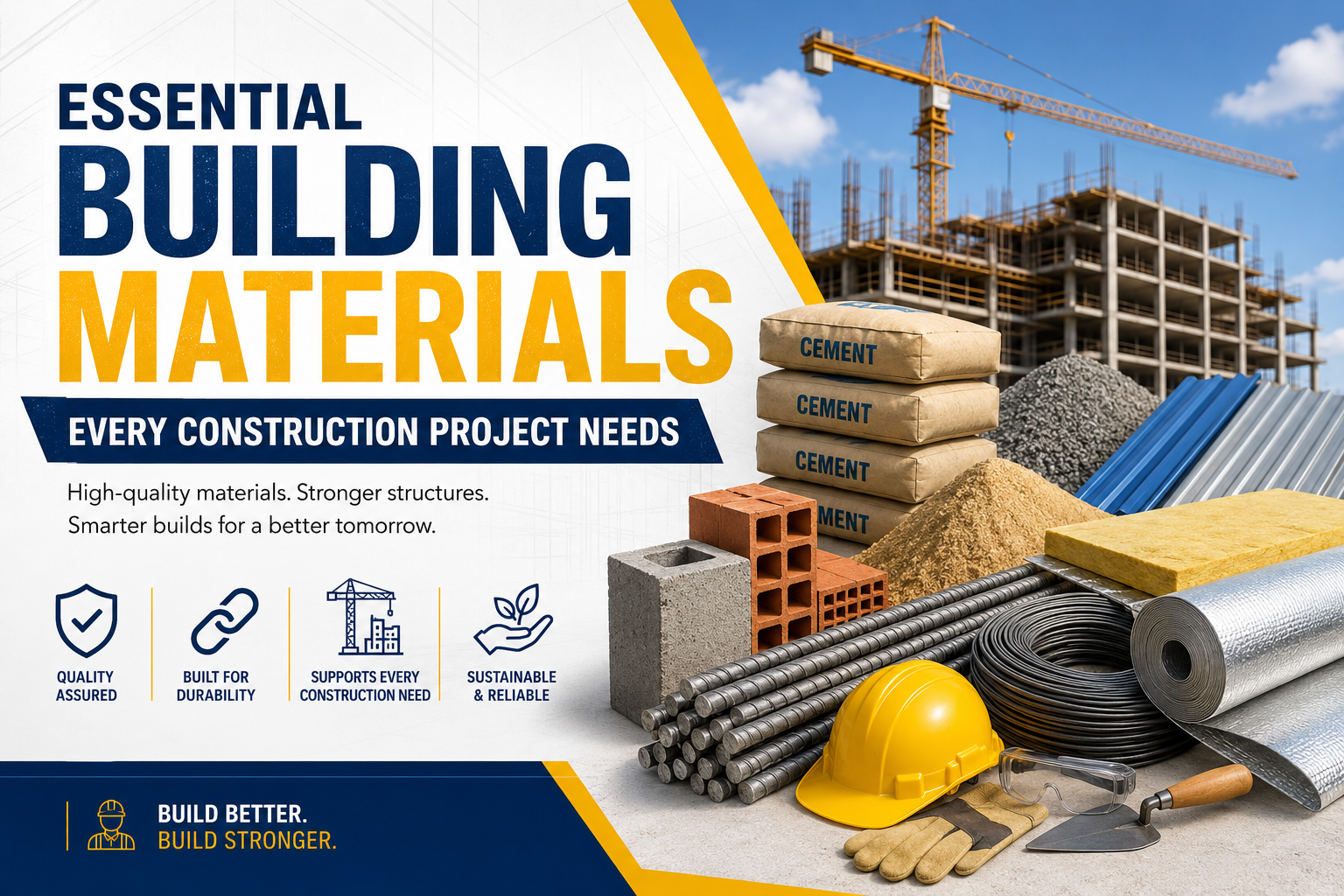
Every successful construction project depends on one critical factor: the quality of building materials used. Whether you’re constructing a residential villa, a commercial complex, or an industrial facility, choosing the right construction building materials directly impacts durability, safety, and long-term cost efficiency. With so many options available in today’s market, understanding which materials matter most can help you plan smarter and build stronger.
In this guide, we break down the essential building materials every project needs, along with practical tips to help you select quality building materials suited to your construction goals.
Why Choosing the Right Building Materials Matters
The materials you choose form the backbone of your entire structure. Poor-quality materials can lead to structural weaknesses, frequent repairs, and safety hazards, while premium materials ensure longevity and better performance against environmental stress. Working with trusted building material suppliers also ensures consistency, timely delivery, and compliance with construction standards—factors that can make or break project timelines.
Cement and Concrete: The Foundation of Every Build
Cement and concrete remain the most fundamental building materials in any construction project. Concrete provides the strength needed for foundations, slabs, columns, and walls, while cement acts as the binding agent that holds aggregates together. High-quality cement ensures proper curing, resistance to cracking, and long-term structural integrity.
When selecting cement and concrete, factors like grade, setting time, and compressive strength should align with your project’s specific requirements—whether it’s a high-rise building or a simple boundary wall. Having the right hand tools on site also makes mixing, leveling, and finishing concrete work far more efficient.
Steel Reinforcement Materials for Structural Strength
No modern construction is complete without steel reinforcement materials. These materials, including rebars and wire mesh, are embedded within concrete to enhance tensile strength and prevent cracking under load. Reinforced concrete structures can withstand seismic activity, heavy loads, and environmental wear far better than plain concrete alone.
Structural steel also plays a major role beyond reinforcement bars. It’s widely used in beams, columns, trusses, and frameworks for commercial and industrial buildings due to its strength-to-weight ratio and resistance to deformation. Cutting and shaping steel reinforcement on-site requires reliable cutting and sawing tools to ensure precise, clean results.
Structural Steel: Built for Strength and Speed
Structural steel has become a preferred choice for large-scale projects because it offers faster construction timelines without compromising on strength. It’s resistant to pests, fire (when treated), and extreme weather conditions, making it ideal for warehouses, factories, and multi-story buildings. Additionally, structural steel is recyclable, supporting sustainable construction practices—a growing priority across the UAE’s building sector. Moving heavy steel sections around a site safely is much easier with the right material handling equipment, such as trolleys and pallet trucks.
Bricks and Blocks: Versatile Building Components
Bricks and blocks continue to be indispensable building materials for walls, partitions, and load-bearing structures. Available in various types such as clay bricks, concrete blocks, and AAC (Autoclaved Aerated Concrete) blocks, they offer different benefits depending on the project.
Concrete blocks are popular for their strength and ease of installation, while AAC blocks are lightweight and provide excellent thermal insulation. Choosing the right type depends on factors like climate, structural load, and budget considerations. When laying bricks and blocks, workers should always be equipped with proper PPE safety equipment to prevent injuries on site.
Roofing Materials That Protect and Perform
A building’s roof is its first line of defense against weather elements, making roofing materials a crucial part of any construction plan. Options range from metal roofing sheets and clay tiles to membrane roofing systems, each offering different levels of durability, insulation, and maintenance needs.
In regions with extreme heat, reflective and heat-resistant roofing materials can significantly reduce indoor temperatures, lowering energy consumption for cooling systems. Roofing work at height also calls for sturdy, certified ladders to ensure safe access.
Insulation Materials for Energy Efficiency
Proper insulation materials are essential for maintaining comfortable indoor temperatures while reducing energy costs. Common options include:
Thermal insulation boards for walls and roofs, mineral wool for soundproofing and fire resistance, and spray foam insulation for sealing gaps and improving energy efficiency. Many insulation and sealing tasks rely on high-quality adhesives and industrial tapes to secure materials in place.
Investing in quality insulation materials not only enhances comfort but also contributes to sustainable building practices, an increasingly important factor in modern construction codes.
Choosing the Right Building Material Suppliers
Sourcing materials from reliable building material suppliers ensures consistent quality, competitive pricing, and timely project delivery. A trusted supplier should offer certified products, technical support, and a wide range of construction building materials to meet diverse project needs—from cement and concrete to steel reinforcement materials and finishing products. Browse our full product range to see everything available for your next project.
Final Thoughts
Selecting the right combination of building materials—from cement and concrete to steel reinforcement materials, bricks and blocks, roofing, and insulation—lays the groundwork for a safe, durable, and cost-effective construction project. Partnering with experienced building material suppliers ensures you get quality products that meet industry standards and project specifications. Contact us today to discuss your project requirements.
Frequently Asked Questions
Q1: What are the most essential building materials for construction?
Cement, concrete, steel, bricks, blocks, roofing, and insulation materials are essential for any project.
Q2: Why is structural steel important in construction?
It offers high strength, faster builds, and durability for large or multi-story structures.
Q3: How do I choose reliable building material suppliers?
Look for certified products, quality consistency, fair pricing, and on-time delivery.
Q4: What insulation materials improve energy efficiency?
Thermal boards, mineral wool, and spray foam help reduce energy costs effectively.