

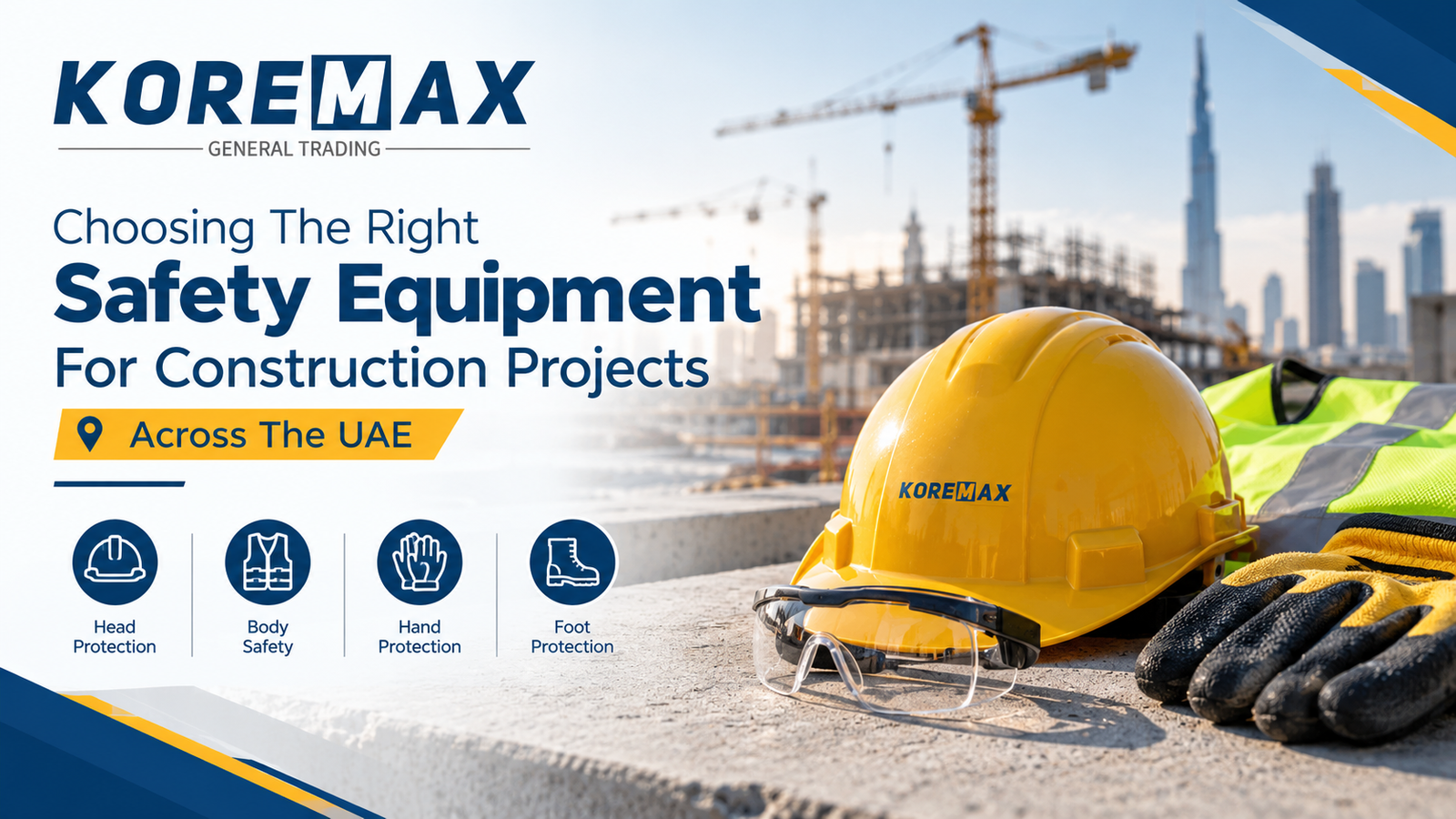
Construction sites involve multiple hazards, from falling objects and sharp materials to airborne dust, excessive noise and work at height. Choosing suitable construction safety equipment helps protect workers, reduce preventable injuries and maintain safer site operations.
Across the UAE, safety planning must also account for high temperatures, intense sunlight and dusty conditions. The right equipment depends on the work being performed, the hazards identified and the applicable workplace safety requirements. Contractors should assess each task before selecting safety equipment rather than relying on a standard kit for every worker.
1. Start With The Main Construction Site Hazards:-
Before purchasing construction safety products, identify the risks associated with each job. Workers handling steel reinforcement face different hazards from those cutting concrete, welding metal or operating heavy machinery.
A site-specific risk assessment helps determine which protective equipment is required, who needs it and when it must be worn. It should also consider the condition of existing equipment, worker training and the need for additional controls beyond PPE.
2. Select The Essential Personal Protective Equipment:-
Every construction project needs appropriate basic protection. The exact requirements depend on the task and site risk assessment,
But common essentials include:
- Safety helmets: Protect against relevant impact and falling-object hazards. Choose suitable, standards-compliant helmets with appropriate ventilation and accessories for site conditions.
- High-visibility clothing: Reflective vests or coveralls help workers remain visible around vehicles, machinery and active work areas.
- Safety footwear: Protective-toe boots with suitable slip-resistant and puncture-resistant soles help protect against heavy objects, sharp materials and uneven surfaces.
- Eye and face protection: Safety glasses, goggles and face shields should match the hazard, including flying particles, dust, splashes or sparks.
Equipment must fit correctly, remain in good condition and be compatible with other protective items. For example, eye protection should fit securely with a helmet or respirator where both are required.
3. Match Gloves And Respiratory Protection To The Task:-
Hand injuries can occur during material handling, cutting, welding and chemical applications. Select gloves according to the specific risk.
Cut-resistant gloves may be appropriate for handling sharp metal or construction materials. Chemical-resistant nitrile or PVC gloves can suit certain oil, fuel and chemical applications, while suitable heat-resistant gloves are needed for welding and hot work. No single glove protects against every hazard.
Respiratory protection also requires careful selection. Dust from concrete cutting and masonry work may require an appropriate particulate respirator. Tasks involving hazardous vapours or fumes may need a different type of respiratory protection based on the substance and exposure assessment.
Respirators must provide the required protection, fit the wearer and be maintained correctly. Dust suppression, ventilation and other exposure controls should also be considered rather than relying on PPE alone.
4. Provide Fall Protection And Hearing Protection:-
Work at height presents a serious risk of injury. Where workers could fall from an elevated position, suitable protection may include guardrails, properly designed platforms, safety nets or personal fall-arrest systems.
A fall-arrest system may require a compatible full-body harness, suitable lanyard or connecting device and an appropriate anchor point. Equipment must be selected for the application, inspected according to the manufacturer’s instructions and used by trained workers. Applicable UAE and project-specific requirements should determine the controls needed at each working height.
Construction workers may also face harmful noise from drilling, cutting and heavy machinery. Suitable earplugs or earmuffs should be selected according to the measured noise exposure and required level of protection. Hearing protection must not replace practical measures to reduce noise at its source.
5. Account For The UAE Climate:-
Heat and dust can affect both worker comfort and the performance of protective equipment. During hot weather, breathable workwear, suitable sun protection and cooling measures may support safer working conditions.
However, lightweight clothing must still meet the protection requirements of the task. Welding, chemical handling and other high-risk activities may require specialised protective garments that cannot simply be replaced with lighter alternatives.
Employers should also provide access to drinking water, suitable rest breaks, shaded or cooled recovery areas and heat-stress procedures in line with applicable UAE requirements. Eye protection and respiratory equipment should be appropriate for dusty working conditions.
6. Check Standards, Fit And Equipment Condition:-
Before purchasing construction safety equipment, verify that each item meets the relevant technical standards and applicable UAE requirements. Depending on the product, this may involve recognised standards such as EN or ANSI specifications, appropriate conformity documentation and any required project or authority approvals.
Do not assume that every product carrying a certification mark is suitable for every task. Check the intended application, protection rating, sizing, compatibility and manufacturer’s guidance.
Regular inspections are equally important. Damaged helmets, worn harnesses, deteriorated gloves and defective eye protection should be removed from service and replaced as required.
7. Build A Site-Specific Safety Equipment Plan:-
A practical procurement checklist should cover the equipment needed for each trade, the number of workers, replacement requirements and storage arrangements. Contractors should also account for worker training, inspection schedules and the availability of suitable replacement products.
The objective is to provide protection that matches actual site conditions – not simply to purchase a standard collection of safety products.
Source The Right Construction Safety Products:-
Effective workplace safety begins with identifying hazards and providing equipment suited to the work. From helmets and protective footwear to gloves, respirators and fall-protection systems, each item should serve a defined safety requirement.
Koremax General Trading LLC supplies PPE safety equipment, professional tools and industrial products for businesses across the UAE. Contact the team to discuss construction safety products and workplace supply requirements.
Frequently Asked Questions
What Safety Equipment Is Needed On A Construction Site?
Common essentials include helmets, protective footwear, high-visibility clothing, eye protection and task-specific gloves or respirators.
How Should PPE Be Selected For UAE Construction Projects?
Assess site hazards, working conditions, applicable UAE requirements, equipment standards and the needs of each task.
What PPE Is Required For Working At Height?
Depending on the risk assessment, protection may include guardrails, suitable platforms or a compatible personal fall-arrest system.
How Can Construction Workers Be Protected From Heat?
Use appropriate workwear, hydration, rest breaks, shaded or cooled areas and heat-stress prevention procedures.
When Should Construction Safety Equipment Be Replaced?
Replace equipment when damaged, defective, expired where applicable, or no longer suitable for safe use under the manufacturer’s guidance.