

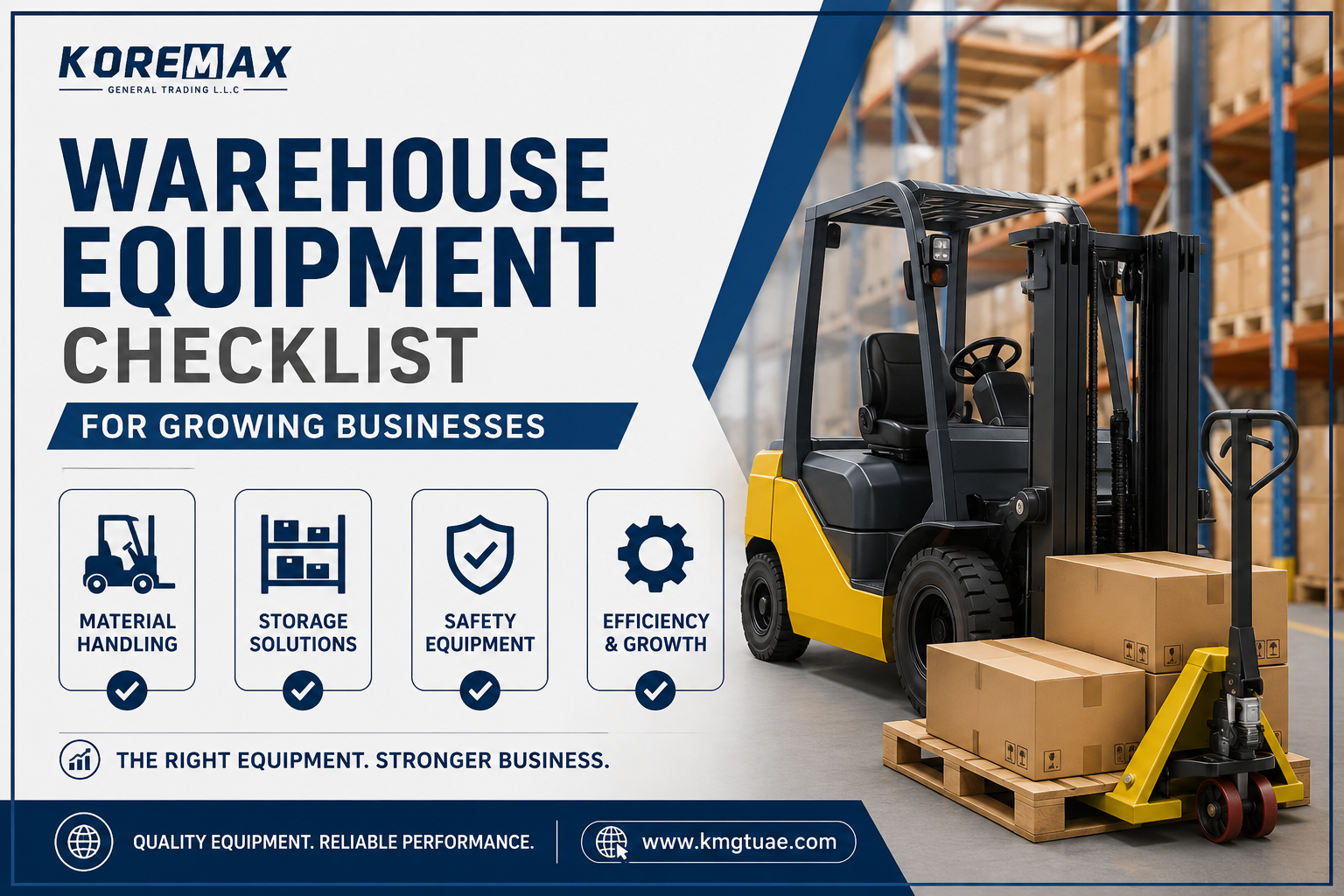
If your operations are expanding, you’ve probably already noticed how quickly small inefficiencies turn into bigger problems. A proper Warehouse Equipment Checklist isn’t just a nice-to-have at this stage – it’s what keeps productivity, safety, and inventory management from falling apart as order volumes climb.
Whether you’re setting up a brand-new facility or reworking an existing one, the equipment used in warehouse operations you choose now shapes how smoothly things run later.
Good picks across material handling, storage, packing, and safety cut down on downtime and give your team room to grow into the space instead of fighting it.
Why Does a Proper Equipment Checklist Actually Matters?
A warehouse isn’t just four walls and some shelves. It’s where goods come in, get stored, get packed, and go back out again, often several times a day. Skip the right equipment and you’ll feel it fast: slower picking, higher labour costs, and more near-misses on the floor than anyone’s comfortable with.
Working through a practical checklist means you’re not scrambling to buy things reactively. You end up with what you actually need to handle rising order volumes, and you avoid the classic trap of spending money on gear that looks useful but doesn’t earn its keep long-term.
Material Handling Equipment That Keeps Things Moving:-
Good material handling equipment is really the backbone of daily warehouse life. It’s what lets staff shift products around without wrecking their backs, and it’s usually the difference between a smooth shift and a chaotic one.
A few of the most common pieces of equipment used in warehouse settings:
- Pallet trucks for shifting loaded pallets over short runs
- Electric or manual lifting gear for heavier loads
- Platform trolleys and platform carts for cartons, tools, and loose stock
- Hand trucks for quick, lightweight transfers
What you actually need comes down to your layout, the weight of what you’re moving, and how often you’re moving it. Get this right and you’ll notice fewer damaged goods and a steadier flow through the warehouse.
Storage Solutions That Make the Most of Your Space:-
Once stock starts piling up, organisation stops being optional. Solid warehouse storage solutions let you actually use the space you have – floor and vertical – instead of stacking boxes wherever there’s room.
Some of the more common systems worth considering:
- Industrial shelving for boxed products and spare parts
- Pallet racking for bulk inventory
- Storage bins for smaller components
- Mezzanine floors to add usable capacity without expanding the footprint
Done properly, this kind of setup improves picking accuracy, keeps aisles clear, and makes the place safer to work in.
Packing and Dispatch Essentials:-
Order fulfilment lives or dies on the packing station. Every growing warehouse needs a dedicated area stocked with dependable packaging supplies and the tools to get products out the door in one piece.
Most packing setups run on a combination of weighing scales, tape dispensers, carton sealers, stretch wrapping gear, and labelling systems. None of it is glamorous, but together it cuts down on packing mistakes and speeds up dispatch – which your customers will notice even if they never see it happen.
If you’re moving serious daily volumes, it’s worth looking at automated packing equipment to keep pace.
Warehouse Cleaning Equipment Supports Safer Operations:-
A clean warehouse is a safer, easier one to run – full stop. Regular upkeep cuts down on dust, debris, and the kind of slip hazards that lead to incident reports.
Reliable warehouse cleaning equipment typically includes:
- Industrial floor sweepers
- Floor scrubbers
- Wet and dry vacuum cleaners
- Waste collection bins
- Pressure washers, where the facility calls for it
Larger sites often step up to commercial cleaning equipment built for continuous use throughout the day. It’s an investment, but it pays off in equipment longevity and fewer safety headaches.
Don’t Skimp on Safety Products:-
Safety has a habit of becoming an afterthought once a warehouse starts scaling – and that’s exactly when it shouldn’t. The right warehouse safety products protect your people, your stock, and your equipment, all while keeping you on the right side of regulation.
Worth having on hand:
- Safety barriers to keep pedestrian and vehicle traffic apart
- Fire extinguishers and emergency response gear
- Safety signage and floor markings
- PPE – helmets, gloves, high-visibility clothing
- Emergency lighting and clearly marked exits
Businesses running facilities in the UAE should double-check they’re meeting local fire and workplace safety requirements for their specific location – these can vary more than people expect.
Heavy Duty Ladders and Loading Equipment:-
Plenty of warehouses need regular access to high shelving or mezzanine storage, and that’s where quality heavy duty ladders earn their place – a straightforward way to cut down on accidents when reaching elevated stock.
On the receiving and dispatch side, dependable loading equipment – dock ramps, loading platforms, lifting aids – keeps goods moving between vehicles and warehouse floors without the delays that pile up during busy stretches.
Building a Warehouse That Grows With You:-
Every warehouse evolves differently, but a structured Warehouse Equipment Checklist makes sure you’re investing in gear that supports where you are now and where you’re headed. Rather than buying reactively once something breaks down, it’s worth reviewing your workflow regularly and looking for gaps in handling, storage, packing, or safety before they become real problems. Thoughtful investment tends to pay for itself through fewer disruptions and better day-to-day efficiency.
Working with a supplier who actually knows the industry also makes the whole process easier – from material handling equipment and industrial shelving to warehouse cleaning equipment, heavy duty ladders, platform trolleys, pallet trucks, and the rest of your warehouse essentials.
At Koremax General Trading LLC, businesses across the UAE can source dependable warehouse and industrial solutions built to support smooth day-to-day operations and long-term growth.
FAQs
Q2: What’s included in a warehouse equipment checklist?
Material handling, storage, packing, cleaning, and warehouse safety equipment.
Q2: Why are pallet trucks important in warehouses?
They move palletised goods quickly and cut down on manual handling strain.
Q3: What are the best warehouse storage solutions?
Industrial shelving, pallet racking, and mezzanine systems make the best use of available space.
Q4: Why should warehouses use heavy-duty ladders?
They give safe access to elevated shelving and reduce workplace accidents.